
Water can spread through a home much faster than many people expect. A small leak under a sink may seem manageable at first. Then a few hours pass, and moisture reaches the flooring, drywall, or even nearby rooms. By that point, the repair process often becomes more involved.
Knowing what to do after water damage can help limit damage to your home and protect your family’s safety. The first few hours matter. Quick action may reduce repair costs, lower the risk of mold, and make the insurance process easier.
This guide explains the practical steps homeowners should take after discovering water inside the home. Whether the damage comes from a burst pipe, heavy rain, an overflowing appliance, or another unexpected event, these steps can help you respond with confidence.
Put Safety Before Cleanup
Before moving furniture or grabbing towels, take a moment to look at the situation. Water damage can create hazards that are not always visible.
If water is close to electrical outlets, appliances, or wiring, avoid walking through the area until the electricity has been turned off safely. Standing water can conduct electricity, even if everything appears normal.
Also check for signs of structural damage. Sagging ceilings, cracked walls, or soft flooring may indicate that the building materials have weakened. If something does not look safe, stay out of the affected area and wait for professional guidance.
A calm approach often prevents injuries. It may feel tempting to clean everything immediately, but safety should always come first.
Stop the Water Source If Possible
One of the first steps in what to do after water damage is stopping the source of the water.
Sometimes the cause is obvious. A broken supply line behind a washing machine or a leaking water heater may only require shutting off the home’s main water valve. Other situations, such as roof leaks or storm flooding, are harder to control right away.
If you know where the water is coming from and it is safe to reach, stop the flow before beginning cleanup. Every minute that water continues to spread increases the amount of damage inside the home.
If the source cannot be identified, avoid guessing. Contact a qualified professional who can inspect the problem safely.
Turn Off Electricity in the Affected Area
Electricity and standing water are a dangerous combination.
If your electrical panel can be reached without entering flooded areas, switch off power to the affected section of the home. Never stand in water while operating electrical equipment.
Do not use wet appliances or extension cords until they have been inspected. Even devices that appear undamaged may have hidden electrical issues after water exposure.
If there is any uncertainty, wait for an electrician or restoration professional before restoring power.
Document Everything Before Cleanup Begins
Many homeowners want to start cleaning right away. That makes sense. Still, taking a few minutes to document the damage can make the insurance process much smoother.
Use a phone or camera to photograph every affected room from different angles. Capture damaged flooring, furniture, walls, ceilings, electronics, and personal belongings.
If possible, record short videos showing the extent of the water. Keep receipts for emergency purchases, temporary repairs, or hotel stays if you cannot remain in the home.
These records may help support your insurance claim later. While every insurance policy is different, detailed documentation is usually helpful.
Remove Valuable Belongings
Once the area is safe, move important belongings away from the water.
Start with items that cannot easily be replaced. Family photographs, documents, computers, jewelry, and sentimental belongings should be moved to a dry location whenever possible.
Furniture sitting in standing water should also be relocated if it can be done safely. Leaving wood furniture or upholstered items in wet conditions for too long may increase permanent damage.
Avoid stacking wet belongings together. Air circulation helps moisture escape more quickly.
If certain items appear heavily contaminated, especially after sewage backup or external flooding, avoid handling them without protective equipment.
Begin Drying the Area Carefully
Removing standing water is only the beginning. Moisture often remains inside flooring, drywall, insulation, and wooden framing.
Open windows if outdoor conditions allow. Use fans and dehumidifiers to increase airflow and reduce indoor humidity. Lift rugs from wet flooring and allow both surfaces to dry separately.
Still, household equipment has limits. Large water losses often require commercial drying systems that reach moisture hidden inside walls and under flooring.
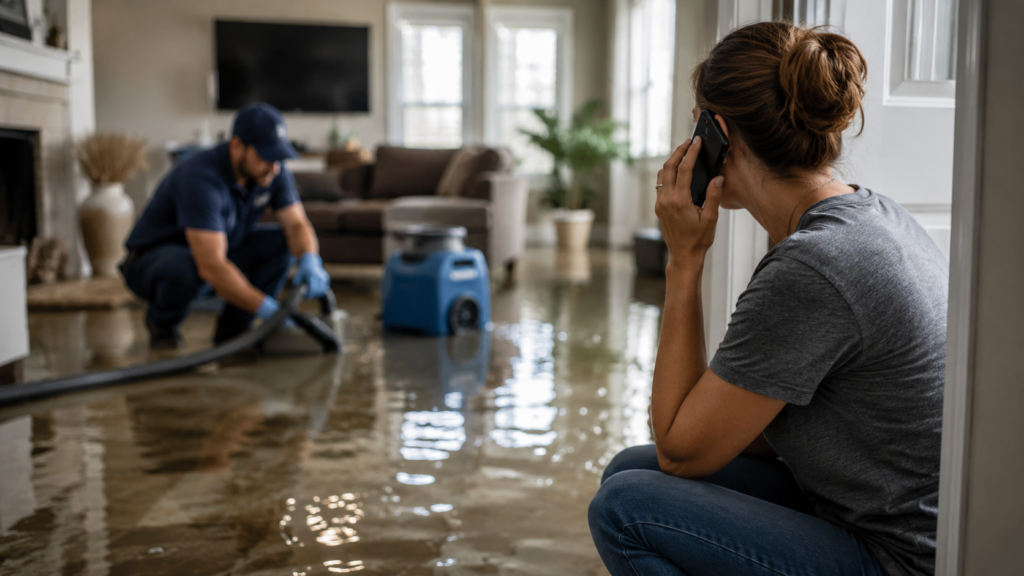
Professional teams performing water extraction services use industrial pumps, air movers, and moisture detection equipment to remove water more thoroughly than standard household tools. This step helps lower the chance of long-term structural damage.
Even when the floor appears dry, hidden moisture may still remain. That is one reason many homeowners arrange water extraction services soon after discovering significant water damage.
Not every water emergency looks serious at first. Yet small amounts of trapped moisture can create larger problems if they remain unnoticed.
Why You Should Not Wait More Than 24 to 48 Hours
Many homeowners believe they can deal with water damage over the weekend or after work. Sometimes that works for a very small spill. A larger water event is different.
Moisture moves into drywall, insulation, subfloors, and wooden framing much faster than it appears on the surface. Even when standing water has been removed, damp materials may still hold enough moisture to create problems.
Within 24 to 48 hours, mold can begin developing under the right conditions. Once mold starts growing, cleanup often becomes more complicated and may involve removing affected building materials.
Delaying repairs can also increase structural damage. Wood may warp, drywall can weaken, and flooring may begin separating from the subfloor.
Quick action gives your home a better chance of avoiding additional damage. That is why many homeowners seek emergency water damage restoration as soon as they discover a significant leak or flood. Early emergency water damage restoration focuses on stopping damage before repairs become larger than necessary.
Know the Difference Between Water Mitigation and Water Damage Repair
These two services are often confused, yet they serve different purposes.
Water mitigation focuses on preventing additional damage. It includes removing standing water, drying affected materials, controlling moisture levels, and protecting areas that have not been damaged.
The goal of water mitigation is to stabilize the property before repair work begins.
Water damage repair comes afterward. Once everything has dried properly, damaged drywall, flooring, trim, insulation, or other structural materials may need replacement or restoration.
Some homes need only minor repairs. Others require rebuilding sections that cannot be saved. The extent of the work depends on how long the water remained inside the property and which materials were affected.
When Flood Cleanup Is Necessary
Not every water loss comes from a plumbing problem.
Heavy rain, overflowing rivers, storm surges, and blocked drainage systems can allow outside water to enter a home. Floodwater often carries dirt, debris, bacteria, and other contaminants that require careful handling.
In these situations, flood cleanup involves much more than removing water. Damaged materials may need sanitizing before repairs begin. Personal belongings should also be inspected to determine whether they can be cleaned safely.
Professional flood cleanup helps reduce health risks while preparing the home for drying and restoration.
If sewage is involved, homeowners should avoid direct contact with the affected area until trained professionals have evaluated the situation.
When to Contact a Professional Water Damage Restoration Provider
Small spills can often be cleaned with household equipment. Large water losses usually require specialized drying equipment and moisture detection tools.
Professional help is worth considering if:
- Water has affected multiple rooms.
- Water has soaked drywall, insulation, or flooring.
- There is standing water that cannot be removed easily.
- The source involves sewage or contaminated water.
- Mold has already appeared.
- The ceiling is sagging or structural materials seem weak.
- You plan to file an insurance claim.
A restoration provider can inspect the affected areas, measure hidden moisture, and explain what work may be needed before repairs begin.
How WaterRestore247 Helps Homeowners
Finding help during a water emergency can feel stressful. Many homeowners simply want someone local who can respond quickly.
WaterRestore247 is a free service that connects homeowners with independent, local restoration providers across the United States. The network helps homeowners locate professionals for water damage repair, water extraction services, mold remediation after water damage, sewage backup cleanup, and insurance claim assistance.
The service currently connects homeowners in more than 1,689 cities nationwide. In many locations, same-day response may be available, depending on provider participation and scheduling.
Homeowners describe the issue, share their location, and are matched with an independent local provider. The provider then contacts the homeowner to assess the situation and schedule service.
Because providers are independent contractors, homeowners should verify licensing and insurance before work begins.
If your home has experienced water damage, visiting the WaterRestore247 website or contacting the network is one way to connect with a local restoration provider in your area.
Frequently Asked Questions
How quickly should water damage be addressed?
The sooner the better. Acting within the first 24 to 48 hours may reduce structural damage and lower the chance of mold growth.
Can I clean up water damage myself?
Minor spills may be manageable with basic drying methods. Large leaks, flooding, or contaminated water usually require professional equipment and inspection.
Does homeowners insurance cover water damage?
Coverage depends on your policy and the cause of the damage. Sudden plumbing failures are often covered, while flooding from outside the home may require separate flood insurance.
What happens during the first restoration visit?
The provider typically inspects the affected areas, identifies the water source if possible, measures moisture levels, explains the recommended work, and discusses the next steps.
Can hidden moisture remain after everything looks dry?
Yes. Water often remains inside walls, flooring, insulation, and framing. Professional moisture detection equipment helps locate hidden damp areas before repairs begin.
Final Thoughts
Knowing what to do after water damage gives homeowners a better chance of protecting both their property and their health. The first steps are simple. Stay safe, stop the water if possible, document the damage, move valuable belongings, and begin drying the affected areas.
Some situations need more than household cleanup. When water has spread through structural materials or flooding has affected several rooms, professional assistance can prevent additional damage and support a safer recovery process.
If you need help finding a local restoration provider, WaterRestore247 connects homeowners across the United States with independent professionals who handle emergency water damage restoration, water mitigation, water extraction services, flood cleanup, and water damage repair. You can contact the network any time to be matched with a local provider serving your area.